

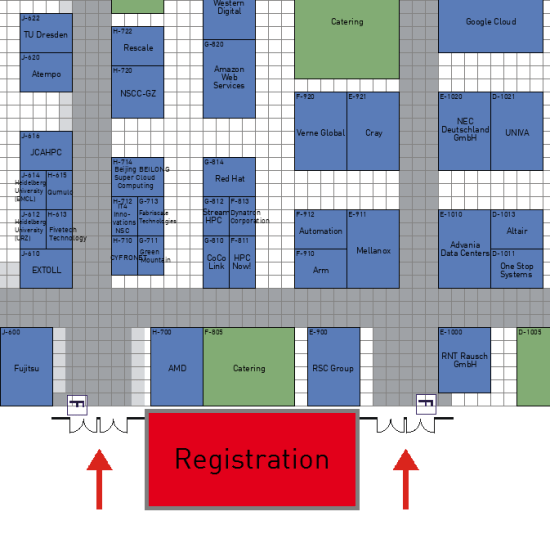
This year we’ll be with 4 people at ISC: Vincent, Adel, Anna and Istvan. You can find us at booth G-812, next to Red Hat.
While we got known in the HPC-world for our expertise on OpenCL, we now have many years of experience in CUDA and OpenMP. To get there, we’ve focused a lot on how to improve code quality of existing software, to reduce bugs and increase speedup-potential. Our main expertise remains full control over algorithms in software – the same data simply processed faster.
Why do we have a booth?
We’ll be mostly talking to (new) customers for development of high performance software for the big machines. Also we’ll have a list of our open job positions with us, and we can do the first introductory interview on the spot.
Our slogan for this year is:
There are a lot of supercomputers. Somebody has to program its software
We’ll be sharing our week on Twitter, so you can also see what we find: posters about HPC-programming on CPU and GPU, booths that have nice demos or interesting talks and ofcourse the surprises.
Let’s meet!
If you don’t have an appointment yet, but would like to chat with us, please contact us or drop by at our booth. As we’re with four people, we have high flexibility.


 Answer: Yes, actually a lot!

 This series “
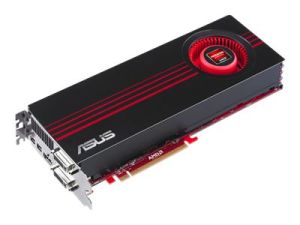 GPUs have been our mysterious friends and known enemies for years, as they let us run code in expected and unexpected ways. GPUs have solved problems for many of our customers. GPUs have such a high rate of evolvement, that they’ll remain important for the years to come.
 Our managing director,


 As of this month Stream exists 8 years. 8 full years of helping our customers with fast software.In Chinese numerology 8 is a very lucky number, and we notice that.
 Ever saw a claim on a paper you disagreed with or got triggered by, and then wanted to reproduce the experiment? Good luck finding the code and the data used in the experiments.
 When CUDA kept having a dominance over OpenCL, AMD introduced HIP – a programming language that closely resembles CUDA. Now it doesn’t take months to port code to AMD hardware, but more and more CUDA-software converts to HIP without problems. The real large and complex code-bases only take a few weeks max, where we found that solved problems also made the CUDA-code run faster.


 It takes quite some effort to program FPGAs using VHDL or Verilog. Since several years Intel/Altera has OpenCL-drivers, with the goal to reduce this effort. OpenCL-on-FPGAs reduced the required effort to a quarter of the time, while also making it easier to alter the specifications during the project. Exactly the latter was very beneficiary when creating the demo, as the to-be-solved problem was vaguely defined. The goal was to make a video look like a cartoon using image filters. We soon found out that “cartoonized” is a vague description, and it took several iterations to get the right balance between blur, color-reduction and edge-detection.